Thursday, May 7, 2009

My concussed brain...

Image: Sacramento Sirens Football Star Kaitlin Porter

It has been widely reported in the news and on the internet that female athletes appear to suffer more concussions than their male counterparts (for example, see ABC news link). In 2007, researchers reported about the incidence of concussions in high school and college athletes by surveying injury reports from 100 U.S. high schools and 180 U.S. colleges during a one year period (link to full length article in the Journal of Athletic Training). What did these researchers find? And what is a concussion?

From eMedicine, one definition of concussion is a condition in which there is a traumatically induced alteration in mental status, with or without an associated loss of consciousness. A broader definition for concussion is a traumatically induced physiologic disruption in brain function that is manifest by loss of consciousness, memory loss, alteration of mental state or personality, or focal neurologic deficits.

  • An estimated 300 000 sport-related traumatic brain injuries, predominantly concussions, occur annually in the United States. Sports are second only to motor vehicle crashes as the leading cause of traumatic brain injury among people aged 15 to 24 years.
  • In sports played by both sexes, girls sustained more concussions than boys in both high school and college.
  • Concussion rates were higher among collegiate athletes, but concussions represented a higher proportion of all injuries sustained by high school athletes.
  • Based on the national estimate, the majority of concussions resulted from participation in football, followed by girls' soccer, boys' soccer, and girls' basketball.
This brings up the question of why do female athletes appear to suffer more concussions? The answer is not necessarily clear but several ideas are discussed in the research article including differences in the style of play, biomechanical factors, and cultural explanations. For example, it has been suggested that weaker neck muscles and smaller heads predispose females to brain injuries and concussion. However, many of these cited studies were examining soccer players and not female athletes in other sports. Interestingly, cultural differences between how protective coaches and trainers are towards female athletes could contribute to differences in injury reporting or medical care between males and females. Cultural influences might also pressure males to under report injury or ignore injury or return to play. Whatever the reason, it seems clear more research and injury surveillance is needed to understand concussions and risk factors in athletes.

For a more in-depth medical discussion of concussions see this article at eMedicine (link).


~~~ BIO26 ~~~

Tuesday, April 28, 2009

Swine Flu updates from CDC...

Below is a CDC website where you can track the swine influenza situation in the United States:

CDC Swine Flu Website

Also, the U.S. Department of Health & Human Services has a webpage for information related to pandemic flu... with FAQs related to seasonal flu, swine flu, avian flu and more:

U.S. Department of Health & Human Services Pandemic Flu Website

Finally, here is a link to basic information about the influenza viruses that typically cause the seasonal flu:

CDC Seasonal Flu Virus Website


~~~~~ BIO26 ~~~~

Thursday, April 23, 2009

You got the Swine Flu?

Almost everybody has heard of the ominous bird flu or avian flu. But new on the horizon seems to be swine flu. Just like humans, birds and pigs get the flu... influenza viruses which cause respiratory illness. Not commonly, but from time to time these strains of avian or swine influenza are transmitted to humans... usually people in close contact with birds or pigs. Interestingly, several cases of a new strain of swine/pig influenza (which is different from human influenza virus) have been identified in people without known contact with pigs. It also appears that this swine influenza strain might be spreading from human to human contact. Whereas some strains of avian influenza are very deadly in people, this swine influenza virus has not been reported to cause severe illness as of yet. Check out the link to the Centers for Disease Control report on two of these swine flu cases... it is pretty interesting (link here). I have included a couple short excerpts from the CDC's website:

"The lack of known exposure to pigs in the two cases described in this report increases the possibility that human-to-human transmission of this new influenza virus has occurred." "Because these viruses carry a unique combination of genes, no information currently is available regarding the efficiency of transmission in swine or in humans. Investigations to understand transmission of this virus are ongoing."

"... concern exists that this new strain of swine influenza A (H1N1) is substantially different from human influenza A (H1N1) viruses, that a large proportion of the population might be susceptible to infection, and that the seasonal influenza vaccine H1N1 strain might not provide protection."


~~~ BIO26 ~~~

Friday, April 17, 2009

Unrecognized (Silent) Non-Q-Wave Myocardial Infarction...


Just being able to say that will make you sound real smart with your friends and co-workers. You remember that myocardial infarction (MI) refers to death of the heart muscle due to interrupted or impaired blood flow to the myocardium. What about Q-waves? Recall the ECG, with the P-wave, QRS complex, and T wave... the Q portion of the QRS is normally a very small downward blip just prior to the large, prominent R peak. Anyway, large and evident Q waves are used to detect a previous MI. Other ECG abnormalities (ST changes) can suggest an acute MI or MI that is currently happening. These Q waves though show old infarctions. Believe it or not, some patients have an MI and never even notice it and may not report problems to their doctors. This is considered a "silent" or unrecognized MI... later these silent myocardial infarctions can become evident as large Q waves in the ECG. Okay, okay, we are getting to the unrecognized Non-Q-Wave Myocardial Infarction part. So consider if your patient has had one of these silent MI's BUT say they don't ever develop the abnormally large Q waves? How would you know they had a silent heart attack? You wouldn't know, right? Well, some clever scientists recently reported their use of MRI's to detect these "Unrecognized Non-Q-Wave Myocardial Infarctions." You should be feeling pretty smart by now. What is the importance of all this? As posted at PLoS Medicine, here are some possible implications of this study (summary link; article link):

  • Silent or unrecognized MI's are not being detected in patients with heart disease, since they don't always have Q waves on their ECG
  • Using MRI to detect these silent MI's showed that 70% of silent MI patients lacked Q waves whereas only 30% of patients with silent MI had Q waves
  • It seems that in silent MI (which are often small) the use of Q waves is going to miss a significant portion of patients with silent MI.
  • Non-Q-wave MI is important because it is significantly associated with increased mortality. So we would want to be able to identify these patients.


~ ~ BIO26 ~ ~

Thursday, March 26, 2009

Supersize that Fire Department...

It seems no group is immune to the ever increasing prevalence of overweight and obesity in our U.S. population. Reuters Health is reporting on a recent study published in the journal Obesity, suggesting that new fire and emergency recruits are overweight and unhealthy. The study was limited to a cohort of recruits in Massachusetts but could this be representative of National or Regional trends? Analysis of Body Mass Index or BMI (reflecting height to weight ratio) showed that almost 80% of the recruits were overweight and over 30% were obese in this young (average age of 26.3 years) recruit population of future emergency workers. However, in some cases BMI does not necessarily reflect that a person's body weight is unhealthy or obesity. For example if a study was analyzing BMI of high school or college football players with unusually large amounts of muscle mass. In such as scenario, BMI does not reflect health and weight very accurately. However, this study suggested that the BMI elevations did not necessarily reflect increased skeletal muscle mass in these recruits. In fact, the study appears to have observed higher blood pressures, worsened metabolic profiles, and lower exercise tolerance in those recruits with higher BMI. The authors state the following:
"Excess weight is highly prevalent and associated with elevated cardiovascular risk among (these) future emergency responders. These findings in a population expected to perform demanding duties supporting public safety merit prompt public health intervention."

"Emergency responders should be fit to safely perform strenuous duties. In particular, young recruits are expected to be at or near peak career fitness."
The statements may seem pretty harsh but truthful since we can all imagine that the strenuous nature of emergency work requires that rescuers have excellent cardiovascular fitness and muscular strength. Otherwise who is going to race up those 12 flights of stairs and then carry you out of that burning building?! Check out the Reuters Health article (link) or better yet check out the abstract of the actual research study published in the journal Obesity (link).


~~ BIO26 ~~

Monday, March 16, 2009

Fighting peanut allergy with peanuts?


The New York Times published an interesting article about efforts to treat children suffering from food allergies. Check out the full article here (link). The article discusses recent work by scientists that appears to be successful in treating kids with potentially life threatening allergy to peanuts. The work of Researchers, including Dr. Wesely Burks of Duke University, showed that some patients could be treated by exposing them to very, very small amounts of peanuts. The amount of peanuts was progressively increased overtime until the kids could eat several peanuts without an allergic reaction. The tests were performed under careful medical supervision and the article warns that parents or allergy sufferers should not try this experimental approach themselves. But this research could lead to an eventual treatment that could allow kids with food allergies to eat these foods or at least live without fear of trace amounts of allergens in their food.

"The new treatment uses doses of peanuts that start as small as one-thousandth of a peanut and eventually increase to about 15 peanuts a day. In a pilot study at Duke University and Arkansas Children’s Hospital in Little Rock, 33 children with documented peanut allergy have received the daily therapy, which is given as a powder sprinkled on food. Most of the children are tolerating the therapy without developing allergic reactions, and five stopped the treatment after two and a half years because they could now tolerate peanuts in their regular diet. But four children dropped out because they could not tolerate the treatment."


~~ BIO26 ~~

Friday, March 13, 2009

Protecting women from HIV...


One of your classmates brought this to my attention (thanks Kristin)... pretty interesting stuff. Recent research has been investigating creams and gels that can potentially reduce HIV transmission to women. As we discussed in class, HIV tends to infect immune cells such as macrophages (dendritic cells too?) and Helper T cells (CD4+ lymphocytes). The transmission often takes place in the vaginal mucosa and epithelium. Gels or creams containing chemicals that destroy the virus (microbicides) or prevent the viral infection of the immune cells would reduce transmission, and hopefully decrease or prevent the spread of HIV.

A recent study published in the journal Nature showed reduced virus transmission in a primate model of HIV using the chemical glycerol monolaurate (an ingredient reportedly used in ice cream, cosmetics and found in breast milk). Researchers tested glycerol monolaurate, spiked into K-Y jelly, in their study using macaque monkeys. They put the gel into the vagina of the monkeys and then applied SIV, a monkey version of HIV. Monkeys treated with the chemical appeared to be protected from vaginal HIV exposure while untreated monekys became infected with HIV. Here is a link to a Reuters article reporting the research (link) and here is a link to the PubMed citation for the actual study (link).

Another interesting fact discussed in the article is related to initial HIV infection and transmission. It is reported that HIV infects or activates resident immune cells in the vaginal mucosa like macrophages and dendritic cells. These cells induce inflammation (via cytokines) and most importantly they cause the recruitment of helper T cells (CD4+) to the site of viral infection, in this case the vagina. It seems that this initial recruiting of CD4+ cells to the local site of infection is an important step the systemic spread of HIV which further infects CD4+ lymphocytes throughout the body.

Interestingly, I recall a study not too long ago investigating a microbicide cream used in the vagina that was designed to reduce or prevent HIV transmission. The study was halted because the researchers found the gel actually increased HIV infection... apparently the gel caused inflammation and irritation of the vagina which would then increase the risk of HIV infection in the female. Obviously these strategies have some potential but research and product development have a long way to go.


~~ BIO26 ~~

Sunday, March 8, 2009

Mrs. Doubtfire needs heart surgery...

You may have heard the news that comedian and actor Robin Williams needs to have heart surgery. He reportedly will have aortic valve replacement to fix his left semilunar valve, known more commonly as the aortic valve or aortic semilunar valve. Valve replacement is commonly performed to fix aortic stenosis when the valve opening becomes narrowed. Stenosis of the aortic valve limits the pumping action of the left ventricle and can lead to low exercise tolerance and also left ventricular enlargement. Another less common issue is aortic valve insufficiency when the valve is leaky. This can lead to backflow or regurgitation of blood into the ventricle from the aorta. Options to fix the aortic valve include repair of the valve leaflets or total replacement using an artificial valve (mechanical) or bioprosthetic valve (biological) derived from cadaver, porcine (pig) or bovine (cow) tissues. You can read more about aortic valve replacement at WebMD (link) and watch a webcast of a minimally invasive aortic valve replacement at OR-live (link).


~~ BIO26 ~~

Thursday, February 12, 2009

Injectable Tan?

When I was at the University of Arizona there were various news stories about a so-called "Barbie" drug that stimulated tanning, libido, and weight loss... great right? Perhaps. There were actually two drugs developed at the University of Arizona called Melanotan I and II which are analogs of the naturally occurring hormone called alpha-MSH, or melanocyte stimulating hormone. These drugs and the hormone stimulate (among other things) increased melanin production by melanocytes in the skin, thus leading to increased pigmentation or tanning. When your skin cells or keratinocytes are bombarded with UV light, they release alpha-MSH or closely related peptides that then trigger natural tanning as a protection to UV exposure and damage (see link).

The possibility of an injectable or drug-induced tan is quickly becoming a reality in Europe, Australia, and now even the United States. Clinuvel Pharmaceuticals is performing late stage clinical trials with afamelanotide (or melanotan I) as a photoprotective drug that induces skin pigmentation... tanning. Afamelanotide is being promoted as a photoprotective product to treat several skin disorders that cause photosensitivity, while the drug's use in cosmetic tanning is being downplayed by the company. However, once a drug is eventually approved by agencies like the FDA then doctors are free to prescribe them for "off-label" use which would seemingly include cosmetic tanning. You can only imagine how popular that would be, right? Some concerns exist that melanotan could possibly cause melanocytes to become cancerous (e.g., melanoma). However, safety concerns like these would obviously need to be addressed before the drug is approved for use in people. Note: the potential use of melanotan I and II for sexual dysfunction seems to have been halted due to safety issues and of course the availability of effective drugs like Viagra and Cialis. Melanotan uses in obesity therapy and weight loss seem to be in very early stages at best. See Palatin Technologies for these uses of melanotan.

Read a recent Wire blog entry about melanotan and Clinuvel here at this link.


~ ~ BIO26 ~ ~

Tuesday, February 10, 2009

Mitral Valve Repair in the news...

This news story/release caught my attention since it involves repair of the mitral valve (aka, the bicuspid or left atrioventricular valve). The repair is interesting since it does not require open heart surgery which might normally be used to repair or replace a leaky mitral valve. Watch the video below from YouTube and follow this link to the news story video if you are interested:


The device is called MitraClip... pretty catchy. Based on what I have read on the internet, the device accomplishes a similar result without opening the chest or arresting the heart. Some surgeons do a similar mitral repair that requires opening the chest and use of a cardiopulmonary bypass machine during the surgery to do the job of the heart and lungs during the 2-3 hour surgery. In contrast, the MitraClip procedure is done via access from the femoral vein and so the patients heart is still beating and the chest is not opened. The cusps or leaflets of the mitral valve are clipped together at the center to reduce the regurgitation or backflow of blood from the left ventricle into the left atrium during ventricular systole.

You might try to figure out how they can access the left atrium via the femoral vein? The LA and systemic veins don't exactly connect up unless you travel through the pulmonary circulations. Not really possible right? Well, turns out the surgeons or interventional cardiologists use whats called a transseptal route to the left atrium. A guide catheter is threaded into the inferior vena cava from the femoral vein up to the right atrium. Then they gain access to the left atrium by simply puncturing through the interatrial septum. Thus the go from the RA to the LA through the heart wall between the chambers... called the septum. Some studies even seem to mention using the fossa ovalis as a landmark or site for the transseptal puncturing.


~ ~ BIO26 ~ ~

Sunday, December 7, 2008

All that high-flown medical jargon...

Perhaps you are getting tired of all the jargon and eponyms and overly fancy names thrown around in anatomy/physiology. The medical field amazes me with all its jargon and high-flown language... but then again all those terms do sound cool and make you sound smart when you say them. Maybe that is why doctors and nurses like words like diarthrosis, diaphoresis, dyspnea, dysphonia... imagine life without all these fancy terms. It might sound a little like this Mitchell & Webb Show comedy sketch called "Emergency Medical Treatment"... move over ER, House, and Grey's...


FYI -
For those of you with an iPhone or iPod touch check out the free application called Medical Eponyms, it has tons of terms named after people such as Broca's area or Nissl bodies or my favorite the Sphincter of Oddi. You can also access the database online at eponyms.net

Another great website for those of you with health interests or taking medications is www.rxlist.com where you can look up the details about most all medications. Most include details related to clinical phramacology such as mechanism of action (if known) as well as pharmacodynamics (what the drug does to the body) and pharmacokinetics (what the body does to the drug). You can enter brand name (e.g., Viagra) or generic names (e.g., sildenafil citrate).


~~~BIO25~~~

Saturday, November 1, 2008

VOTE! VOTE! VOTE!


Don't forget to VOTE on Tuesday NOVEMBER 4th!

It's the American in You...


~~~~PSA~~~~

Thursday, October 30, 2008

Just a shade shy of true wickedness...

What can I say? Halloween makes me think of two things... candy and evil... haha... I heard a song say "I’m just a shade shy of true wickedness" and that made me think about whether we are just a gene shy of true wickedness... in other words is there an "evil gene" that could make humans murderous or overly aggressive or violent. The short answer is no... but there certainly seems to be a tremendous amount of effort attempting to discover a potential genetic basis for social behaviors like aggression or a predisposition to criminal behavior. It is a little scary to think that a monster could be lurking in the human gene pool. But given the complexity of the human behavior and interactions of genes, it seems unlikely that a mutation in a single gene sequence (say adenine to cytosine) during development is going to turn normal humans into serial killers... although it might be a cool movie. During my somewhat futile search for the evil gene I did come across some interesting stuff:
  • In the book Hard-Wired (here), author William Clark points out that in the laboratory, rats and mice have been selectively bred for many generations to create strains that are docile or fearful or aggressive with these traits being passed on to each generation each time they breed.
  • Creating transgenic knockout mice, scientists showed that disrupting a single gene encoding the vassopressin 1B receptor created mice with "reduced levels of social forms of aggression"(here). Genetically introducing a related receptor (vassopressin 1A receptor) into the brain of promiscuous rodents (mating with many partners) transformed them into monogamous (one mating partner), pair-bonding animals (here). Does this mean will will be getting an actual"chill" pill in the future or a monogamy pill for all the cheaters out there? Interesting...
  • A few years ago, scientists created so called "daredevil mice" by altering one single gene that is highly expressed in the amygdala of the brain. These transgenic mice were more fearless and displayed risk taking behavior not normally seen in mice.
  • According to an expert commentary in the Journal of the American Academy of Psychiatry and the Law (here), "any attempt to study violent or deviant behavior under the rubric of evil will be fraught with bias and moralistic judgments. Embracing the term evil as though it were a legitimate scientific concept will contribute to the stigma of mental illness, diminish the credibility of forensic psychiatry, and corrupt forensic treatment efforts." Well okay then... deviant behavior gene.
  • People that carve scary or "evil"pumpkins are 3.5X more likely to commit crimes such as shoplifting, illegal parking, and littering... just kidding. That isn't true. Just my hypothesis.
Take home message? There seems to be no evil gene... maybe we shouldn't even use the term evil in the scientific realm. But certainly, studies of rodents and other species prove overwhelmingly that genes influence social behaviors... and there is likely a cohort or group of genes that influence and/or predispose humans to deviant or bad behaviors. Who knows, someday they might even have a genetic test that will determine if you have an increased risk to commit murder!?


Happy Halloween! Be good.


~~~~~BIO25~~~~~

Wednesday, October 29, 2008

Brain Strain...

If you watch lots of sports like me then you are also hearing injury news about players. Unfortunately, most of the reports are often inaccurate and vague in terms of the anatomy and the actual structures that have been injured. One distinction to keep in mind is sprain versus strain.

According to the National Institute of Arthritis and Musculoskeletal and Skin Disease:

Sprain is a stretch and/or tear of a ligament. One or more ligaments can be injured at the same time. The severity of the injury will depend on the extent of injury (whether a tear is partial or complete) and the number of ligaments involved. Common examples would be an ankle sprain involving the stabilizing ligaments of the ankle or injury to the ligaments of the knee or shoulder.

Strain is an injury to either a muscle or a tendon. Depending on the severity of the injury, a strain may be a simple overstretch of the muscle or tendon, or it can result from a partial or complete tear. Common examples would be the injury of hamstring muscles (biceps femoris, semitendinosus, semimembranosus) or muscle od the back. So injury of the calcaneal tendon (Achilles) would be a strain.

Over at Stephania Bell's ESPN blog she points out that an injury to the acromioclavicular (AC) joint, since it is stabilized by ligaments around the joint, can be called a sprain. Although, injury at the AC joint tends to separate the acromion process of the scapula from its articulation with the clavicle... and so we would often just call the injury a "shoulder" separation. She implies that, perhaps, when the team would like to downplay an injury they might say shoulder sprain rather than the more serious sounding shoulder separation. Recall in class to make the distinction between shoulder separation, at the AC joint, and shoulder dislocation which occurs at the glenohumeral joint (humerus with scapula). Stephania discusses a term called shoulder sublaxation which refers to the humerus slipping only partially off the glenoid surface, but not completely dislocating out of the glenoid fossa... so there is an additional shoulder injury to think about... shoulder sublaxation. You are practically an orthopedic surgeon or physical therapist if you are still reading this... ha!

Go read the super cool anatomical NFL injury blog at ESPN (Click Here).


~~~~~BIO25~~~~~

Friday, October 17, 2008

Hooray for cheap anatomy and physiology textbooks!

I wanted to proudly display my "new" but used and very cheaply purchased A&P textbook... courtesy of Half.com by eBay. This was purchased and delivered for under $20... the book is in great shape and hardly looks used at all. The publishing date is 2004, luckily not much has changed in the content of A&P books since 2004 so it would be perfect for any anatomy or physiology class. It did take about a week and a half to arrive but if you are not in a hurry... it even had the CDROM, unopened in the back of the book. This is a great alternative to the $125-$210 new textbooks available online and at the Bookstore.


~~~~BIO25~~~~

Tuesday, October 14, 2008

Misty's dancing career and leg go pop!

Superstar athlete and 2-time Olympic beach volleyball gold medalist Misty May-Treanor injured her leg on the reality TV series Dancing With The Stars. She was forced to drop out of the dancing competition and had to undergo surgery to repair her injured leg. During training / rehearsal for the show Misty ruptured her calcaneal (Achilles) tendon. She reportedly heard a "pop" which is common of people tearing their calcaneal tendon... others often describe "feeling" something hit the back of their leg... caused by the sudden rupture of the body's largest and possibly strongest tendon. [Click images for a larger view]


The rupture of the calcaneal tendon could be a somewhat serious injury to a volleyball player like Misty given the tremendous force and stress on the tendon during jumping and leaping. The Achilles is formed by the tendinous contributions of the gastrocnemius and soleus muscles (i.e., the calf muscles) which are used in plantarflexion of the foot at the ankle... which is part of the motion of jumping. Of course, most athletes make a full recovery from this type of injury and the occurrence of re-rupturing the tendon does not appear to be high. Check out eMedicine for a detailed description of Achilles tendon rupture (LINK). Hopefully Misty will be back to volleyball as good as new when she returns to the beach, and perhaps the AVP beach volleyball tour will comeback to Sacramento... haha... probably not... look at the empty stands... regardless, check out May-Treanor's vertical leap at the net. She is going to need those Achilles tendons healed and healthy.


~~~~BIO25~~~~

Sunday, October 5, 2008

This is your brain on drugs... errr.... music

All of us would probably agree that the music we listen to depends on our mood or even shapes our mood. A slow song might help you mellow out or fall asleep... loud rock songs or hip-hop might motivate your workout routine at the gym. Songs evoke strong emotions and memories from our past.

But what I really wanted to know is "why does listening to your favorite song make you feel so good?" Like many people, it seems I am always finding a new favorite song, listening to it almost obsessively for awhile, and then eventually it is on to a new one. It occurred to me that this seems a lot like reward-seeking behavior or pleasure-seeking behavior such as eating your favorite food, smoking cigarettes, shopping, taking drugs, hiking to the top of a mountain, gambling, etc. You might wonder, as I did, is music making us feel good just like all these other rewarding stimuli?

Well, it turns out that neuroscientists and psychologists have recently been studying music as a model to discover the brain circuitry involved in pleasure and reward. Here are some interesting things I came across on the subject of music listening, pleasure, and the brain:

  • In humans, music increases activity in a network of brain structures involved in reward and pleasure processing including the nucleus accumbens and the ventral tegmental area (1). These brain structures are also known to be active in response to other very pleasurable stimuli, such as food, sex, and drugs of abuse (2).
  • It is believed that pleasurable music activates dopamine pathways in brain regions such as the nucleus accumbens, thus increasing the levels of dopamine in the brain. Dopamine is a neurotransmitter used by neurons to signal to each other. Interestingly, cocaine exposure increases dopamine levels specifically in the nucleus accumbens of rats (3) and music too has been shown to increase dopamine levels in the rat brain within the nucleus accumbens (4,5). What does all this mean? Drugs and music (both seemingly pleasurable stimuli) induce the same neurochemical changes in the same exact brain regions, at least in rats. This is likely to be similar in the human brain.
  • Increased dopamine levels in the brain are associated with compulsive eating, falling in love, sexual pleasure, drug abuse, alcohol consumption, and many other euphoria-inducing stimuli.
What is the take home message? Well, this just might help explain why listening to music* is one of the most rewarding and pleasurable human experiences. It certainly helps me understand why I like listening to my favorite songs over and over again... it is basically a sonic addiction.


*remember music is cheaper than drugs and healthier than cigarettes. Some free music and dopamine release courtesy of SubPop records. Sorry, no hip-hop :)

1 2 3 4 5 6 7 8 9 10 11


~~~~~ BIO25~~~~~~

Saturday, September 27, 2008

Learn to save a life in 2 minutes... the new CPR


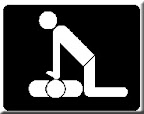
Think watching a two minute video on YouTube might make you a life saver? This video just might... it is on the newest form of CPR for adults that collapse suddenly and it is called continuous chest compression CPR. The physiological basis of this CPR has been discussed in a previous blog post... but check out the video, then go read more about it.


~~~BIO 25/26~~~

Monday, September 22, 2008

TrueBlood?... blood doping and EPO


A recent story in the news reported the re-testing of blood samples from cyclists in this years Tour de France. It seems that several cyclists had suspicious urine samples related to the naturally occurring hormone erythropoietin. In all our bodies, erythropoietin (EPO) is produced by cells in the kidney. EPO circulates in the bloodstream eventually signaling to marrows cells in the cavities of our bones to stimulate production of new red blood cells (erythrocytes). The production of new RBCs is termed... erythropoiesis. Drug companies produce and market synthetic forms of EPO to treat anemia which can often occur with cancer chemotherapy, kidney failure, AIDS, and more.

Cyclists in this years Tour de France are suspected of using a newer generation of EPO called CERA, marketed my the pharmaceutical company Roche. Endurance athletes illegally use EPO type substances in order to increase their RBC count and thus improve the oxygen carrying capacity of their blood. Basically, it improves cardiovascular function giving these elite athletes a potential edge on the competition. Roche suggests that CERA might be more effective than other available EPO drugs... the following is a brief description of CERA from the Roche website:

CERA is a Continuous Erythropoiesis Receptor Activator. Studies have shown that CERA has unique activity at the receptor site. It is postulated this is related to its repeated and rapid attachment and dissociation from the receptor involved in triggering erythropoiesis (red blood cell formation) together with an extended serum half life. This results in more potent stimulation of erythropoiesis, both in magnitude and duration, compared to standard EPO drugs.


~~~~ BIO 25/26 ~~~

Tuesday, September 9, 2008

Smoke 'em if you got 'em... or not


A new report by the American Lung Association describes the current status of tobacco use and policies on college and university campuses in the United States (link to full report). This report has some interesting details... including that 1 in 5 college students smokes cigarettes (or about 19%). Examining the same age group that is NOT in college shows 35% are smokers. The 19% college smokers is the lowest rate in nearly 30 years. Of course, the cigarette industry knows this and is looking to get you on board! Some interesting facts about smoking related to college students:
  • In 2005, the tobacco industry spent more than $1 million per day targeting and marketing cigarettes to college students like you!
  • Cigarette smoking is significantly higher in individuals with lower education levels and lower income levels
  • A recent survey showed that nursing students were more than 4 times as likely to be smokers compared to medical students on the same campus (Ref).
  • In 2005, tobacco companies spent $13.1 billion to market cigarettes. Imagine how much profit they are making in order to spend this much money getting you to buy them!
  • The peak in college smokers seems to have been 1999 with 30% reportedly smoking.
  • Recent declines in college smoking are due partly to the higher prices of cigarettes
  • According to their own documents, tobacco companies market to "occasional smokers" such as college students in order to create new "everyday smokers."
Oh by the way, smoking is still the leading cause of preventable death in the United States, although I believe obesity is catching up. Plus, smoking makes you smell bad... peeeww. Thank you for smoking ;)


---BIO 25---